
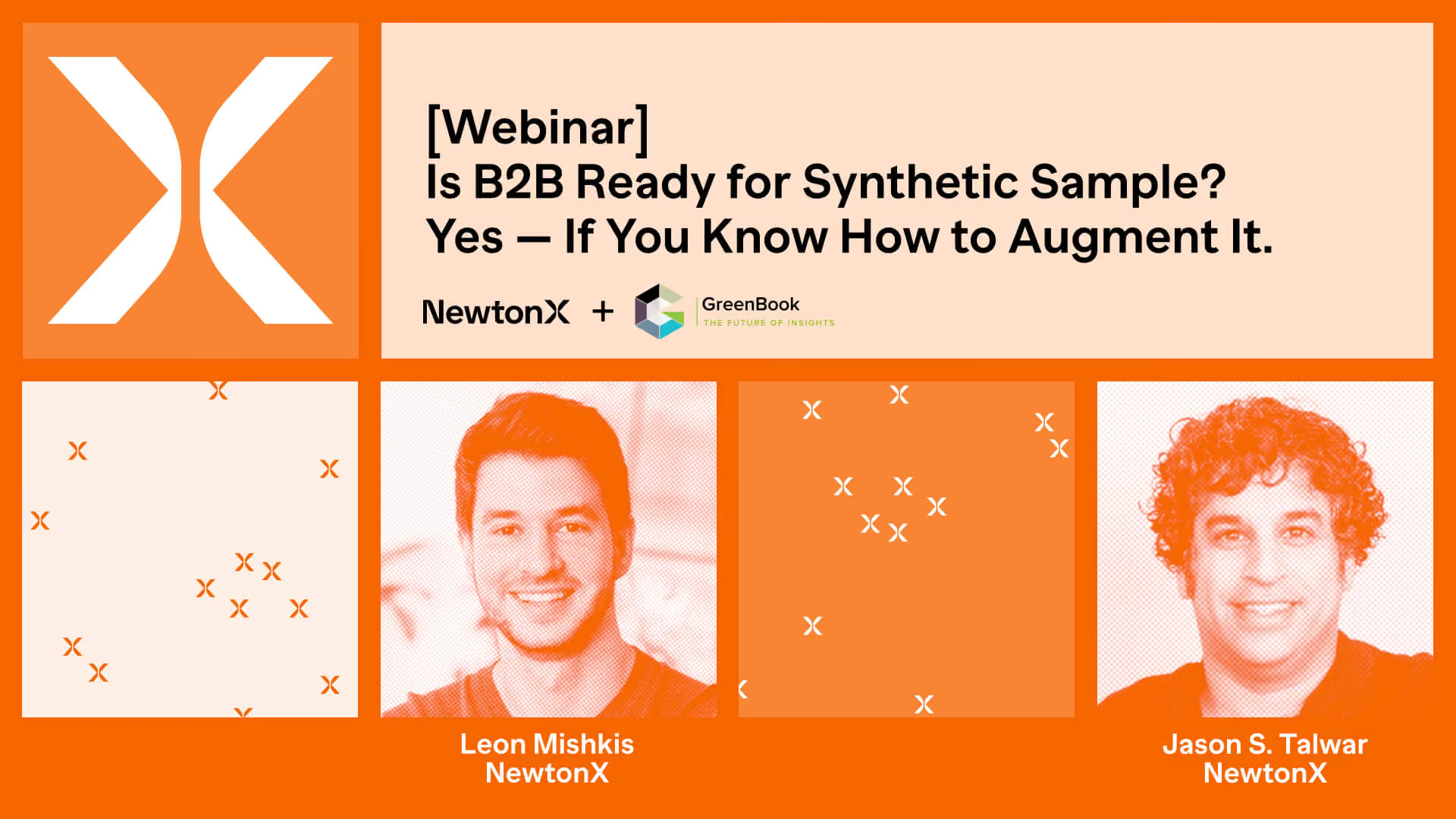
NewtonX COO Leon Mishkis and Principal of Strategic Insights Jason Talwar discuss how augmented data delivers high-quality insights for niche audiences at a fraction of the time and cost, answering questions like “Can I trust it?” and “How does it work?”
Can I trust it? Synthetic data vs. augmented data
Synthetic data is a hot topic in market research, even though it’s been around for 20+ years. It’s getting a lot of attention because it has the potential to solve one of our industry’s biggest challenges: access to high-quality data and trusted insights. When it comes to the trustworthiness of synthetic data, it’s important to understand the nuances between synthetic and augmented sample:
Synthetic data is artificially generated to replicate the structure and statistical properties of real-world data:
- Synthetic avatars are an option when real data is difficult to obtain or too expensive. Synthetic data can introduce risks like “hallucinations” (AI-generated inaccuracies) and lacks the depth of real-world data.
- Augmented data always uses verified, high-quality responses for a specific research project to train AI models. It generates more accurate, efficient results and statistically significant insights from niche segments without the fraud risks that often come with unverified panels.
Challenge: getting fast, affordable access to high-quality B2B insights
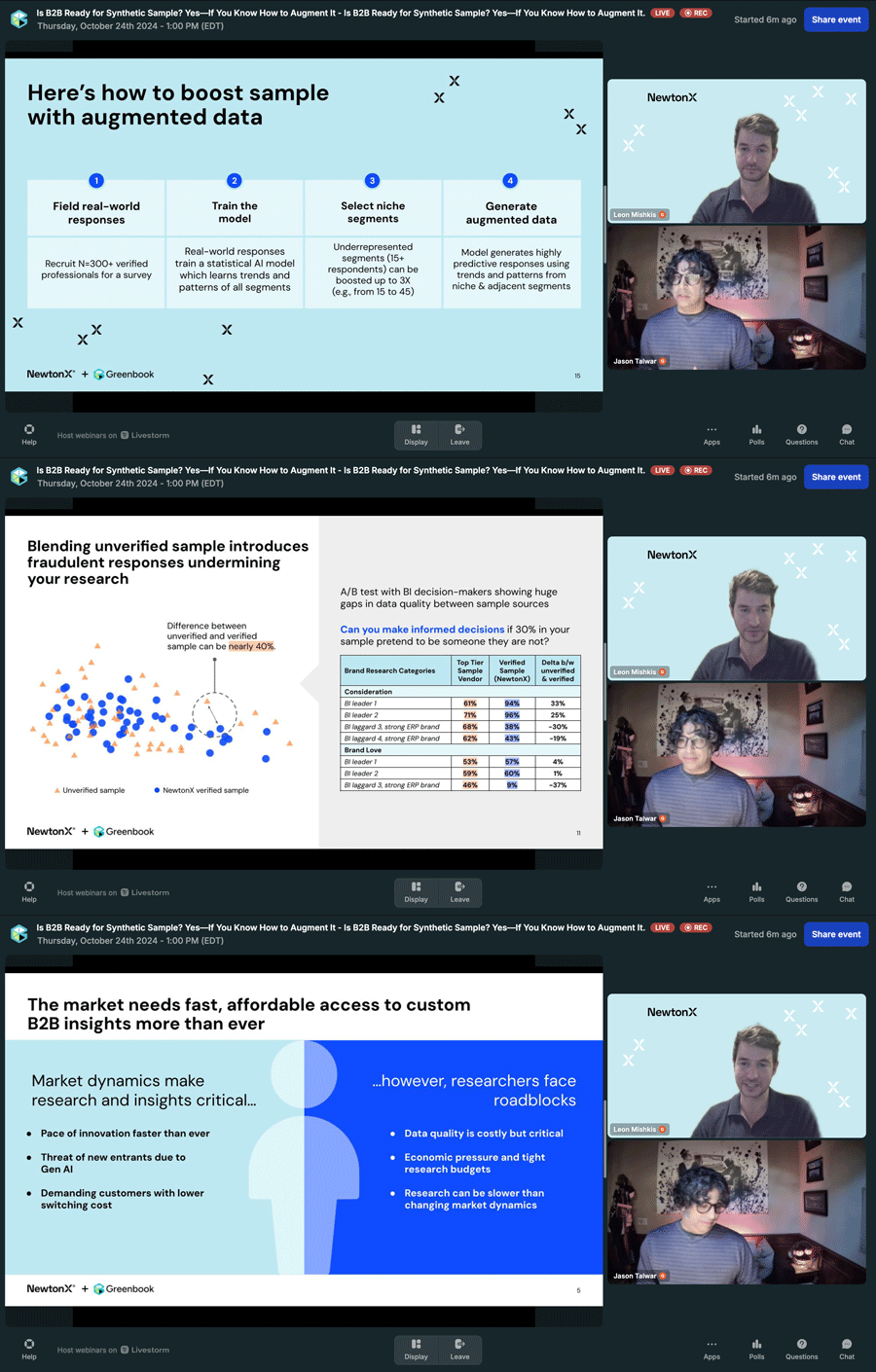
Businesses need quicker, more efficient ways to gather high-quality data. And researchers face increasing pressure to deliver faster insights with tighter budgets, all while maintaining data quality—a critical factor in making informed decisions. There are two main issues:
- Capped budget. Don’t have enough budget to recruit niche audiences.
- Sample scale. Your sample is not large enough for analysis.
But here’s the catch: blending low-quality data sources to meet budget constraints often results in skewed insights.
The solution: boosting synthetic sample with augmented data
Imagine you’re running a global brand tracker but struggling to gather enough data from underrepresented segments in specific regions. Augmented data can fill those gaps—using patterns from adjacent segments to boost the sample size up to three times without compromising quality. It’s faster, more cost-effective, and delivers results you can trust.
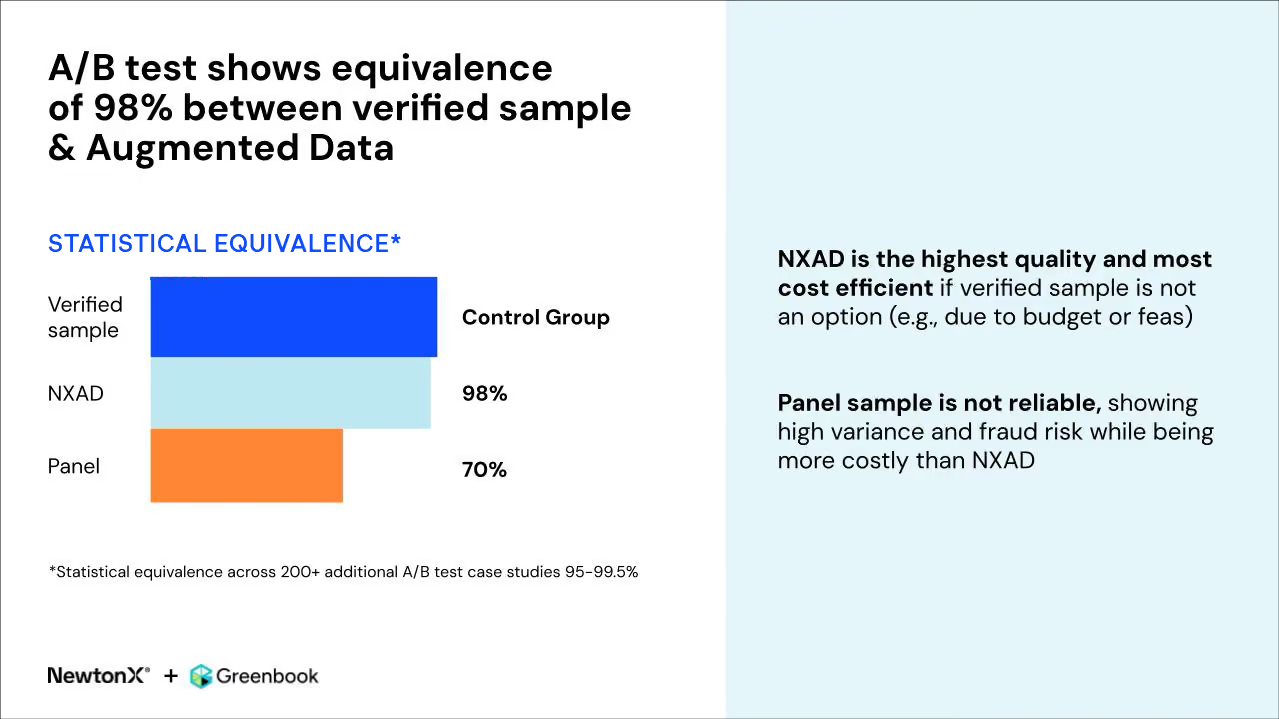
In a NewtonX A/B test, augmented data performed at a 98% equivalence to verified respondents—outperforming traditional panel samples, which showed higher fraud risks and variability.
How does it work? A framework for boosting synthetic sample with augmented data
Jason outlined a four-step framework for boosting synthetic sample with augmented data:
- Field real-world responses. Recruit 300+ verified professionals for your survey.
- Train the model. Use the real-world responses to train a statistical AI model to learn trends and patterns of all segments.
- Select niche segments. You can boost underrepresented segments of 15+ respondents up to three times (e.g., from 15 to 45).
- Generate augmented data. The AI model will generate highly predictive responses using trends and patterns from niche and adjacent segments.
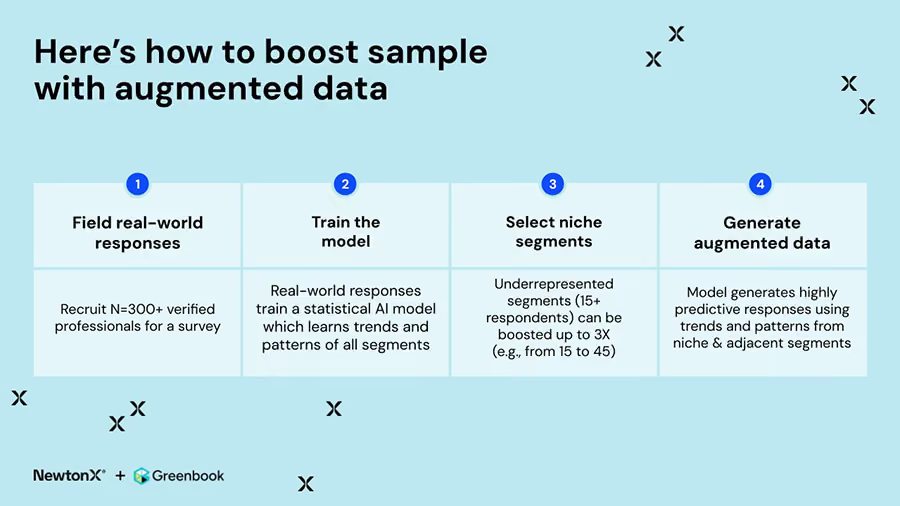
The AI model uses trends and patterns of adjacent segments to generate augmented data for underrepresented segments, including personas, geographies, and industries.
How do we know augmented sample works? Talwar says, “We know augmented sample works because we’ve tested and proven it. Our A/B test shows the equivalence of 98% between verified sample and augmented data.”
NewtonX Augmented Data – the future of B2B research
Companies and their research teams want better insights, quicker fielding times, and lower costs. This is the promise of AI that NewtonX Augmented Data delivers.
With its ability to deliver better insights, faster fielding times, and lower costs, augmented data is the future of B2B research. The most successful companies and research leaders will use augmented sample to get trusted insights that lead to better decisions and a significant competitive edge.
Catch the whole conversation, including an incredible Q&A with some of the brightest minds in B2B research: